Landscaping Turf Laying Guide
1. Site preparation
Mark the area where the turf will be laid (the turf installation site). Dig a 100mm deep trench to allow for drainage. Spread 75mm of crushed stone and 5mm of lime or sand on the turf site. Prepare the turf foundation by leveling the ground, sprinkling some water, and compacting the base with a compactor. Ensure that no stones protrude from the surface and that the turf foundation is 20mm lower than the level ground.
2. Unrolling the synthetic turf
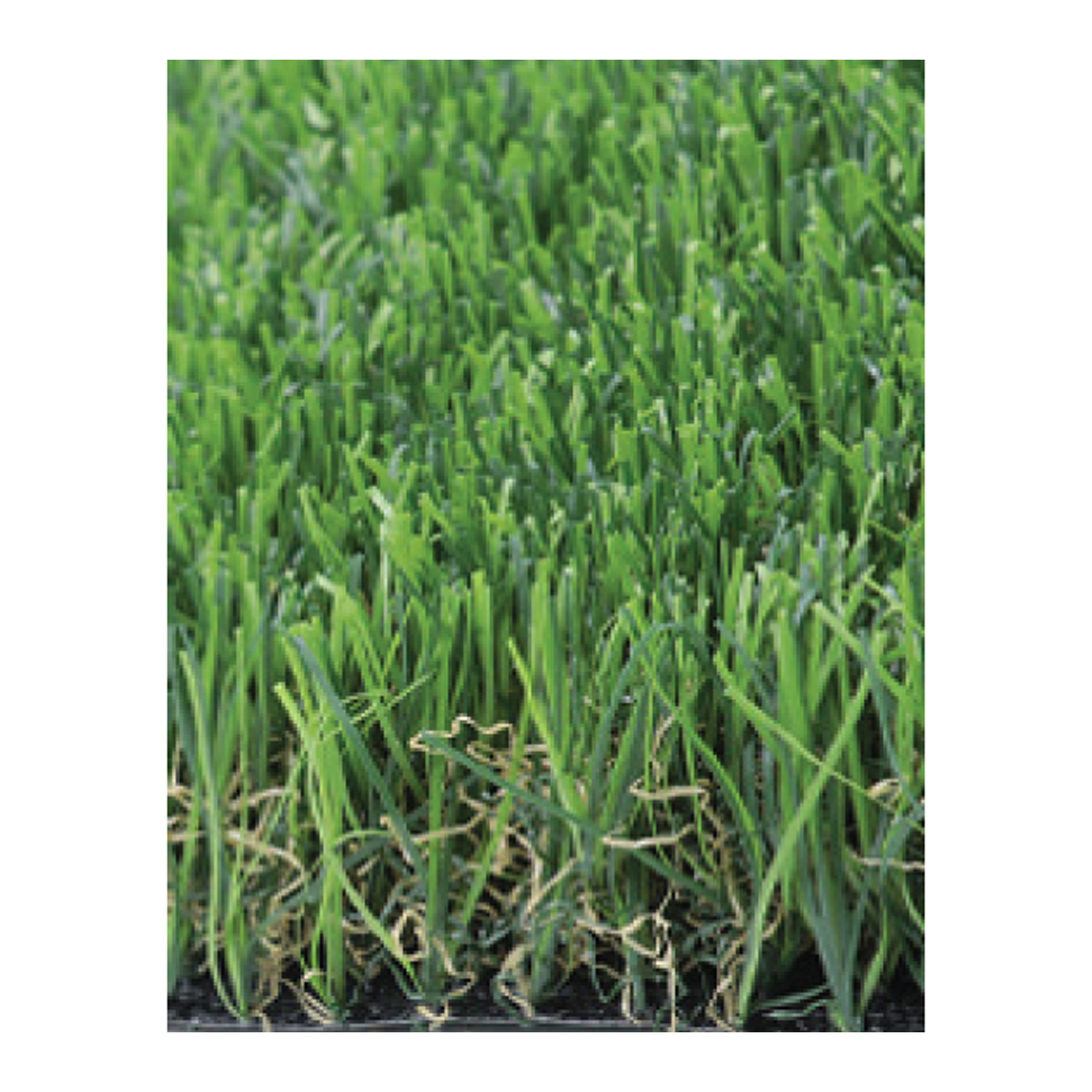
Synthetic turf is delivered in rolls. After transportation to the installation site, the turf rolls need to be unrolled and laid flat. Allow the turf to rest for 1-2 days to stretch to its factory width and stand naturally upright. Failure to stretch the width may result in weak or raised seams, affecting the lifespan and appearance of the turf. During installation, ensure consistent unrolling direction for each turf roll to maintain uniformity in the direction of the grass fibers.
3. Cutting the synthetic turf
Use a sharp knife to trim off any excess turf. To ensure a smooth installation, make sure the edges of the turf are cut straight. Pay attention not to damage the grass while cutting and leave a distance of about 0.5cm between the cutting line and the grass fibers.
4. Gluing
Roll up the edges of the turf on both sides and ensure that the surface under the seam cloth is clean. Place the seam cloth flat and apply glue onto it. Place both sides of the turf onto the seam cloth, making sure that the edges of the turf align with the centerline of the seam cloth. Use your fingers to straighten the grass fibers along the seam and separate them. For indoor turf, spot adhesion can be used by applying glue in several spots such as the center and surrounding areas. For outdoor turf, line adhesion is required. Apply glue along the line between the ground and the seam cloth, and apply glue to the bottom edges of both sides of the turf to fix them onto the seam cloth.